The $4 Note That Drives $4,000 in Mortgage Referrals

Everyone in mortgage knows referrals drive the business. A single referral from a real estate agent can yield thousands in origination fees. Yet most loan officers pour their marketing budget into digital ads and email campaigns that get ignored. The math does not add up.
The Referral Gap
According to the National Association of Realtors, referrals remain the primary method most buyers use to find their agent. Among younger millennials, 54% found their agent through referrals by friends, neighbors, or relatives. For older millennials, that figure was 42%. The report also found that 88% of buyers said they would use their real estate agent again or recommend them to others.
These numbers tell a clear story. Referrals dominate how people choose agents. Agents who trust you send you deals. The relationship is the channel.
Yet walk into any mortgage marketing meeting and you will hear about Facebook ad spend, SEO tactics, and lead buying. These channels have their place. But they face a problem that gets worse every year. The competition for attention has never been higher.
Why Digital Outreach Is Breaking Down
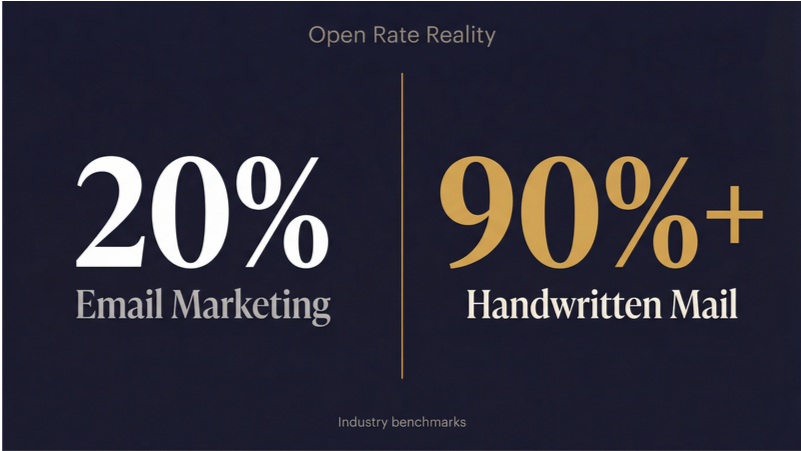
According to Mailchimp industry benchmarks, email marketing in real estate sees open rates around 20%. That means four out of five messages never get read. Those that do compete with dozens of other pitches in the same inbox. Buyers and agents alike have learned to tune out promotional noise.
Digital ads suffer from the same fatigue. According to WordStream industry benchmarks, click-through rates on Facebook ads in the financial services sector hover below 1%. The cost per lead keeps climbing while conversion rates stay flat. Large brokerages with seven-figure marketing budgets can play this game. Individual loan officers cannot.
The problem is not the platform. It is the format. Digital communication feels cheap and easy to ignore because it is cheap and easy to ignore. When everyone sends emails, no one stands out.
The Channel Your Competitors Forgot
Handwritten mail occupies a strange place in modern marketing. It costs more than email. It takes longer to produce. It cannot be automated with a simple software plug-in. These are features, not bugs.
Imagine sending 20 handwritten notes to agents you have not heard from in six months. Three respond within a week. One sends you a referral that closes at $387,000. That is one card that paid for itself a hundred times over.
Industry sources consistently cite open rates above 90% for hand-addressed mail, far exceeding the 20-30% typical of email marketing. The research on handwritten mail response rates and ROI is extensive: direct mail delivers 37x higher response rates than email, and neuroscience studies show physical mail activates the brain’s reward center more strongly than digital. When someone receives a physical card with actual handwriting, they open it. Basic human psychology explains why. Physical mail signals effort. Effort signals care. Care builds trust.
The cost is roughly $3 to $5 per note including materials and postage. Compare that to the average mortgage origination fee, which typically falls between $3,000 and $5,000 per loan. The math is simple. One referral pays for hundreds of notes.
A Quarterly Outreach System That Works
Consistency beats intensity. Sending twenty notes in one week and then nothing for three months looks sporadic and desperate. A steady rhythm of five notes per week keeps you present without becoming a pest.
Here is a practical framework for a quarterly touch system:
Week 1: The market update. Share a specific insight about your local market. Mention a recent trend you noticed. Keep it short and useful.
Week 5: The personal check-in. No business talk. Ask about their family, their recent vacation, or their weekend plans. Show you see them as a person, not a lead source.
Week 9: The success story. Briefly describe a recent smooth closing. Focus on the client outcome, not your own role.
Week 13: The appreciation note. Thank them for their partnership. Be specific about what you value in working with them.
This cycle repeats every quarter. Four touches per year per agent. Each note takes five minutes to write if you batch them. The investment is minimal. The differentiation is massive.
The ROI Calculation
Let us walk through the numbers conservatively. Say you send twenty handwritten notes per month. At $4 per note including materials and postage, that is $80 monthly or $240 per quarter.
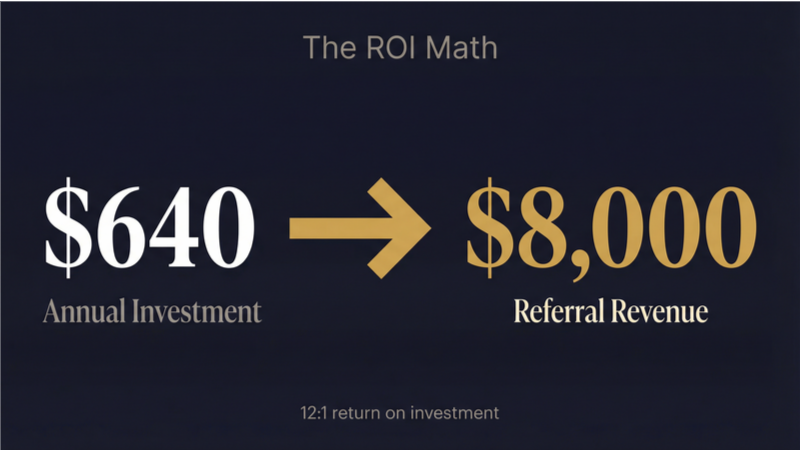
Now assume you maintain relationships with forty referral partners. Your quarterly touch system means each partner gets four personalized notes per year. That is 160 notes annually at a cost of $640.
If that investment generates just one additional referral per quarter, you have spent $640 to earn roughly $4,000 in origination fees. That is better than a 6:1 return. If you close two extra loans per quarter, the return jumps above 12:1.
Compare this to digital lead generation. A single mortgage lead from paid search can cost $50 to $150. Conversion rates on purchased leads often sit below 2%. You might spend $5,000 on leads to close one loan. The handwritten approach is not just more personal. It is more profitable.
Making It Sustainable
The main objection loan officers raise is time. Writing forty notes per month feels like a lot when you are already juggling applications, client calls, and compliance paperwork.
The solution is batching. Set aside ninety minutes on a Monday morning. Prepare your list. Write all your notes for the week. Drop them in the mail on your way home. When you batch the work, the time investment shrinks while the impact stays constant.
Another objection is handwriting quality. Not everyone has perfect penmanship. The good news is that authenticity matters more than calligraphy. A note that looks genuinely handwritten beats a perfect font every time. The slight variations and imperfections signal humanity. If the structure of the note itself is the part that feels uncertain, the proper handwritten letter format covers the six-element skeleton (date, salutation, body, closing, signature, optional postscript) that gives a five-minute note enough shape to read as deliberate.
Where Stylograph Fits
This is exactly the problem services like Stylograph are designed to solve: capturing your actual handwriting and applying it to personalized notes at scale, so the outreach stays authentic without consuming your calendar.
For real estate agents looking to strengthen client retention strategies, explore how personal follow-up systems create compounding business value in our articles on client retention and repeat business, loan officer-agent relationships, and in-house lending referral strategies.
FAQ
How many notes should I send per week?
Start with five. That is twenty per month, or 240 per year. If you maintain relationships with fifty referral partners, each gets roughly five touches annually. That is enough to stay top-of-mind without becoming annoying. Scale up or down based on your results.
What should I write about?
Avoid generic platitudes. Reference specific details you know about the recipient. Mention their recent listing, their kid’s graduation, or a local market trend you discussed. The more specific, the more memorable. One concrete detail beats a paragraph of general well-wishing. For more on tone and structure, see our thank-you notes guide.
How do I know if it is working?
Track your referral sources. When a new deal comes in, ask how they heard about you. After a few months of consistent outreach, you will see a shift. Referral partners will mention your notes in conversation. They will thank you for thinking of them. That is your signal the system is working.